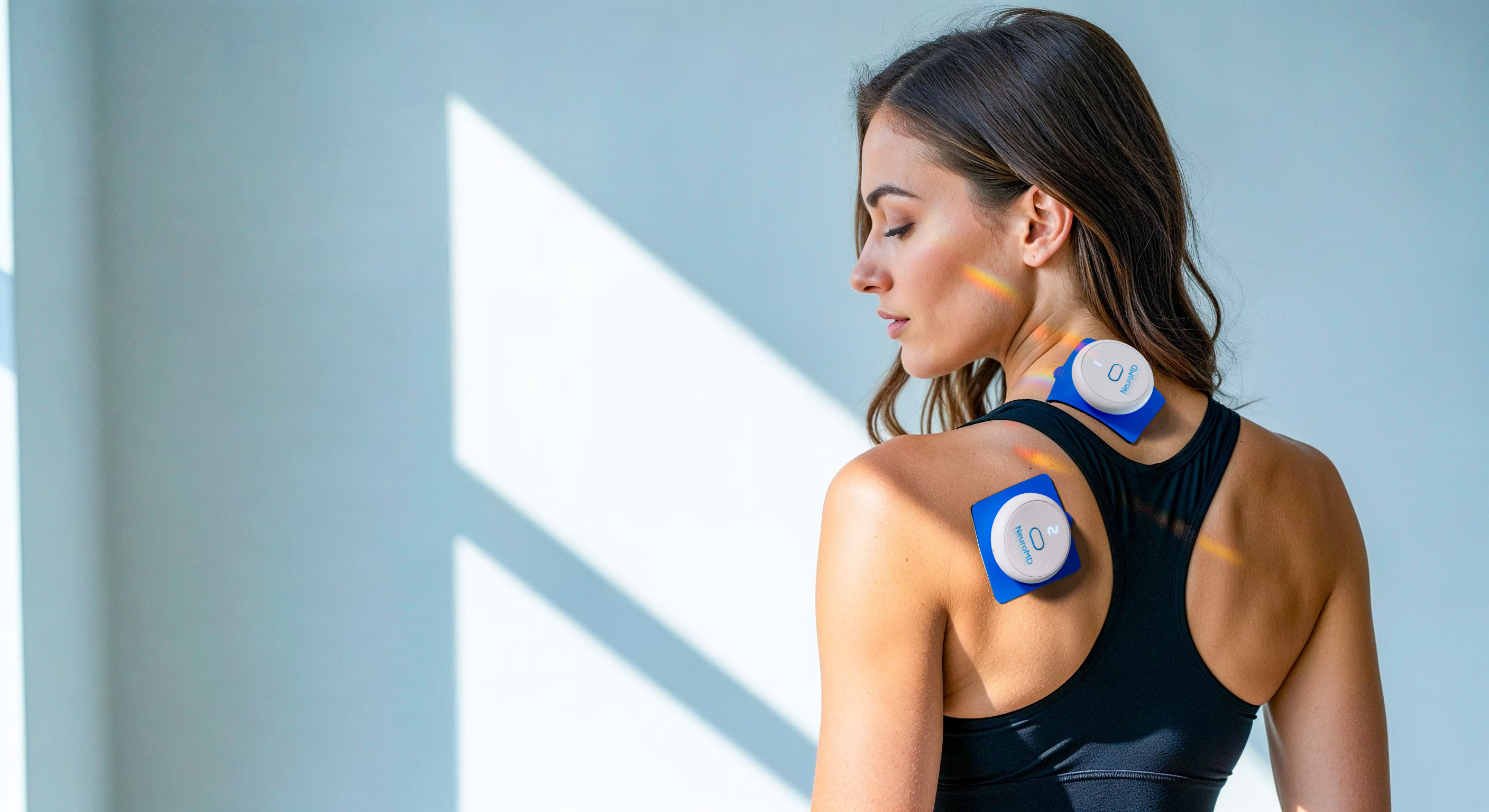
Chronic lower back pain and sciatica affect millions of people and often lead to a cycle of temporary relief methods that don’t address underlying muscle weakness. NeuroMD offers a drug-free, at-home alternative based on neuromuscular electrical stimulation (NMES) technology. The Corrective Therapy Device is designed to activate both sensory and motor nerves, causing controlled muscle contractions that aim to strengthen the deep stabilizing muscles around the spine.
Unlike standard TENS units that primarily block pain signals for short-term relief, NeuroMD focuses on muscle activation and strengthening. Sessions typically last around 20–25 minutes and can be done at home with a wireless, rechargeable device controlled by a remote. The company provides a guided program (often around 12 weeks) along with electrode pads, a recovery guide, and support resources.
The device uses clinically studied NMES parameters to deliver electrical pulses through adhesive electrode pads placed on the skin. These pulses stimulate nerves that cause the targeted muscles to contract and relax rhythmically. Over consistent use, the goal is to improve muscle strength, support better spinal stability, increase local circulation, and gradually reduce pain and inflammation.
It is FDA-cleared (not “approved”) as a Class II medical device for uses including pain management, muscle re-education, increasing range of motion, and related indications. Many users report noticeable changes within the first few weeks, with more sustained benefits after completing a structured program. The company offers a 60-day at-home trial, which allows people to test it with relatively low risk.
NeuroMD primarily focuses on back-pain relief with its flagship Corrective Therapy Device. They also offer a Whole Body version, a Foot & Lower Leg device for neuropathy or circulation issues, and replacement electrode pads. The main kits are wireless, come with a remote, and include guidance for placement and intensity levels.
The device tends to suit people dealing with:
It is not a replacement for medical care. People with pacemakers, certain implanted devices, or specific medical conditions should consult a doctor before use. Results vary, and consistent use according to the program is generally recommended for best outcomes.
Start with the recommended intensity and placement guides included in the kit. Many users do sessions several times per week as part of the multi-week protocol. Keep electrode pads clean and replace them as needed for good conductivity. Because of the 60-day trial, it’s relatively low-risk to try, but track how your body responds and combine it with gentle movement or professional advice when appropriate. Check current pricing, bundles, and any HSA/FSA eligibility on the official site.
NeuroMD stands out in the at-home pain-relief space by emphasizing muscle strengthening through NMES rather than purely masking symptoms. Its FDA clearance, wireless design, structured program, and trial period make it a practical option for people looking for a non-drug approach to chronic back discomfort. As with any medical device, individual results differ, and it works best when used consistently and alongside sensible overall care. For many users dealing with ongoing lower-back issues, it offers a convenient way to support recovery from home.
